BIRD HABITAT IMPROVEMENTS
Eagle Scout Project by Eagle Scout Keegan Hauck
Posted August 21, 2026
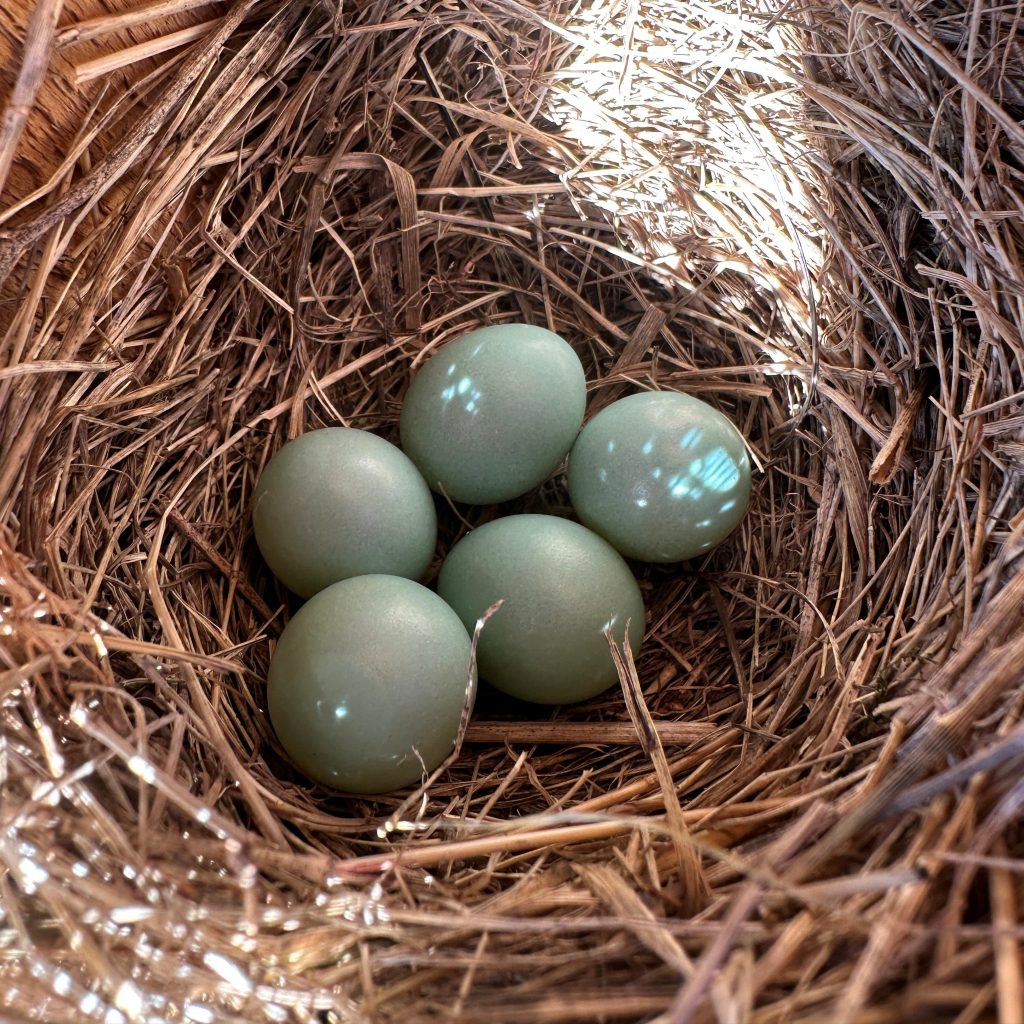
Boy Scout Troop 601 has been using Kay’s Ledge for outdoor learning and campouts since 2018. One of the scouts, Keegan Hauck, contacted us in the Fall of 2023. He was interested in completing his Eagle Scout project at Kay’s Ledge!
After some discussions, it was agreed that improvements to bird habitat by providing bluebird nest boxes and a connecting trail in the north field would be a beneficial improvement in line with the goals of the nature preserve to protect habitat for wildlife.
Bluebirds and tree swallows have been observed a few times in the north field at Kay’s Ledge; however, it was not known if they were breeding in the area. In nature, bluebirds nest in cavities in trees located in grassy habitats. As trees were removed from fields, hollows in wood fenceposts were used. With the loss of habitat and a decrease in trees and wood fenceposts, bluebirds and tree swallows have fewer nest sites in their preferred habitat to raise young. It was hoped that by placing nest boxes in the north field, the Conservancy could bring more of these birds to the area.
Keegan contacted the Bluebird Association of Wisconsin (BRAW) for recommendations on nest box construction and coordinated a field visit with the BRAW County Coordinator to determine the number and locations of the boxes.
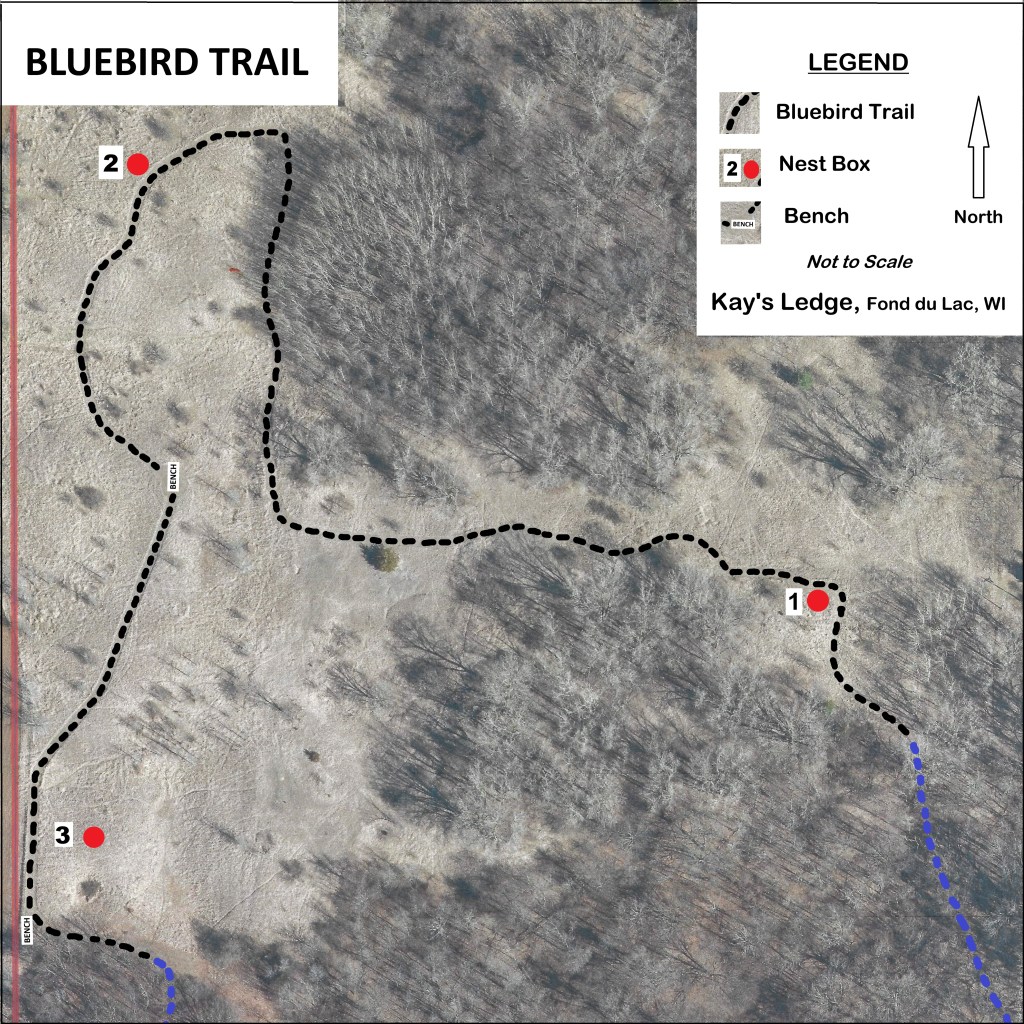
Three locations were chosen based on the recommended nest box spacing of about 100 yards. We were disappointed we couldn’t put up more but were told that bluebirds are territorial and defend their nests up to several hundred feet. A closer spacing would also promote other species to use the nest boxes.
The project was expanded to include the construction of brush piles made out of woody invasive species for small mammals to use as refuge from predators.
The plan was to install the posts in the Fall, build the nest boxes over the Winter, and then plan a Spring Scout work day to install the nest boxes and construct the bush piles.
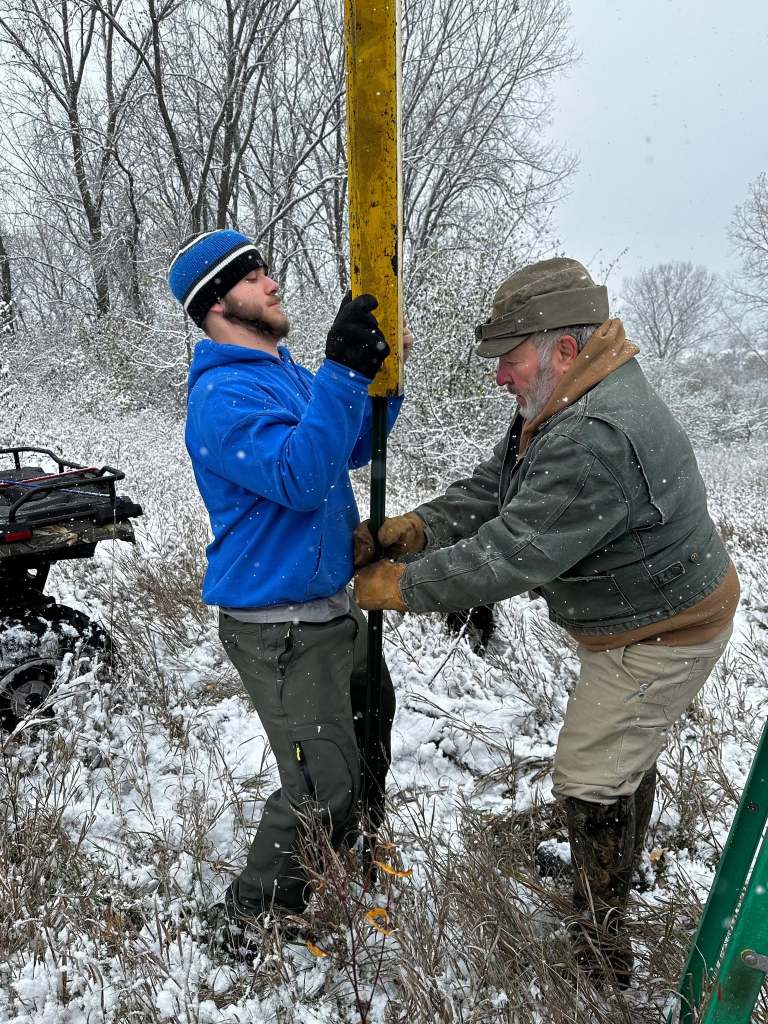
The posts for the nest boxes were installed during an October snow storm. Keegan worked with volunteer Jeff Kramer to pound the posts. An early March date chosen for the Scout Workday.
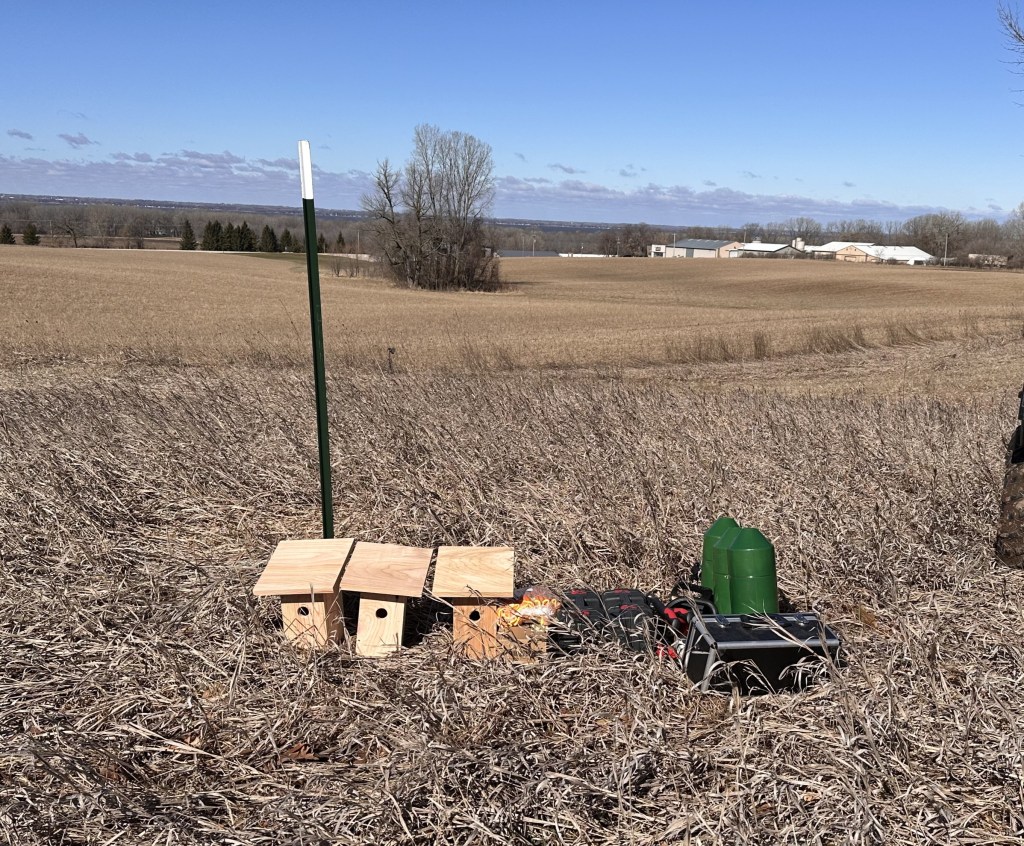
The early Spring workday started out cold but bright. Keegan engaged a few Scouts to assist him in mounting the nest boxes to the poles and provided direction to the remaining Scouts for brush pile construction. The nest boxes were equipped with a predator guard to prohibit raccoons and opossums from climbing the posts.
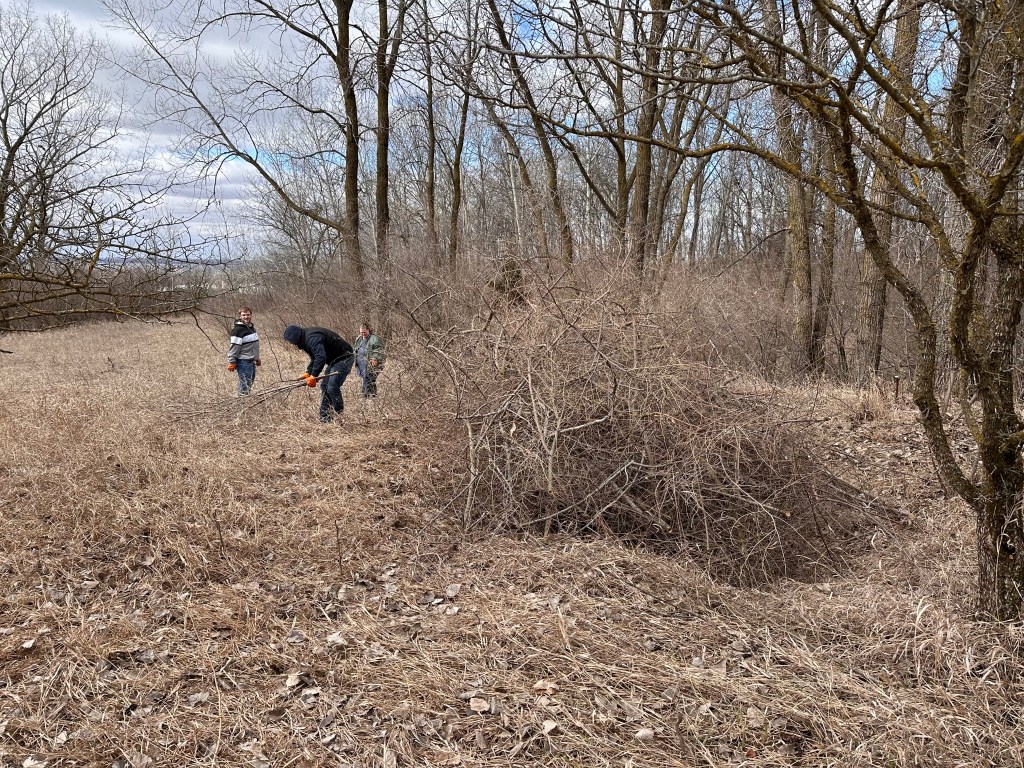
Cutting the brush and building the brush piles was very hard work. The invasive Autumn Olive that was used for the project has thorns and was hard to haul. The Scouts and volunteers built two very large brush piles for habitat. The piles were placed in low, dry depressions. Logs and larger branches were placed as a base and smaller branches were placed over top.
The morning quickly became overcast, the temperature dropped, and the wind picked up making the work harder but the Scouts completed the project despite the worsening weather. The Conservancy had planned a campfire and grilled lunch for the scouts, however; the campfire was cancelled due to the strong wind. After lunch, cold hands were warmed over the embers of the grill before heading home.
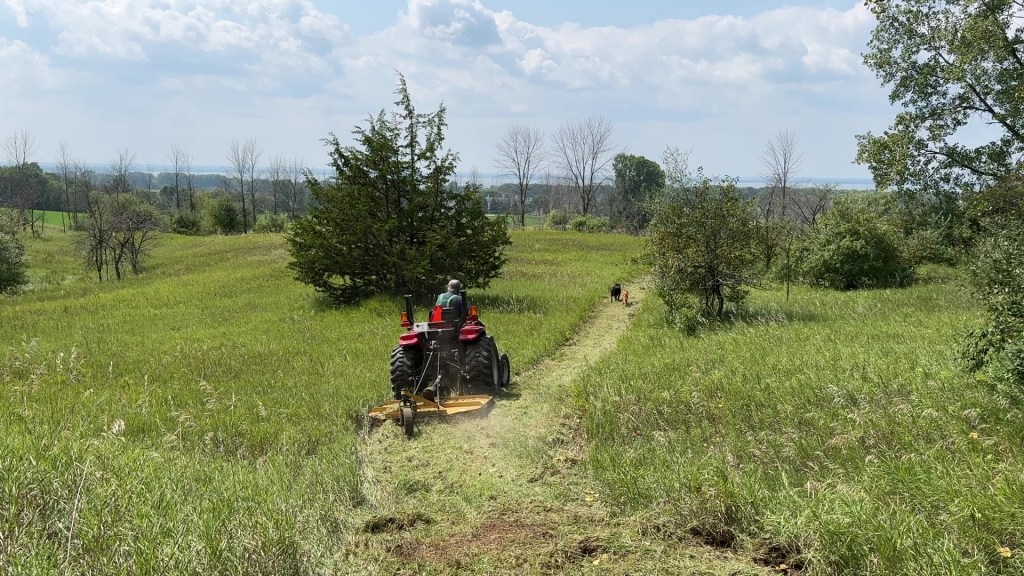
Later that Spring, the bluebird trail connecting the three nest boxes was mowed. As well as providing easy access to the field, the mowed trails provide better access to the ground insects, like crickets and grasshoppers, that bluebirds prefer.
This was an important project for Kay’s Ledge. Threats to both bluebirds and tree swallows include loss of habitat and nesting cavities, competition for nesting sites from other birds, predation, the decline and timing of insect hatchings, and excessive summer heat. Due to climate change, insect emergence is occurring earlier and over a shorter period. Bird hatching dates no longer correspond to peak insect populations. Cold spells following an insect hatch and the use of pesticides reduce insect populations. Nest boxes have a positive impact on both bluebird and tree swallow populations.
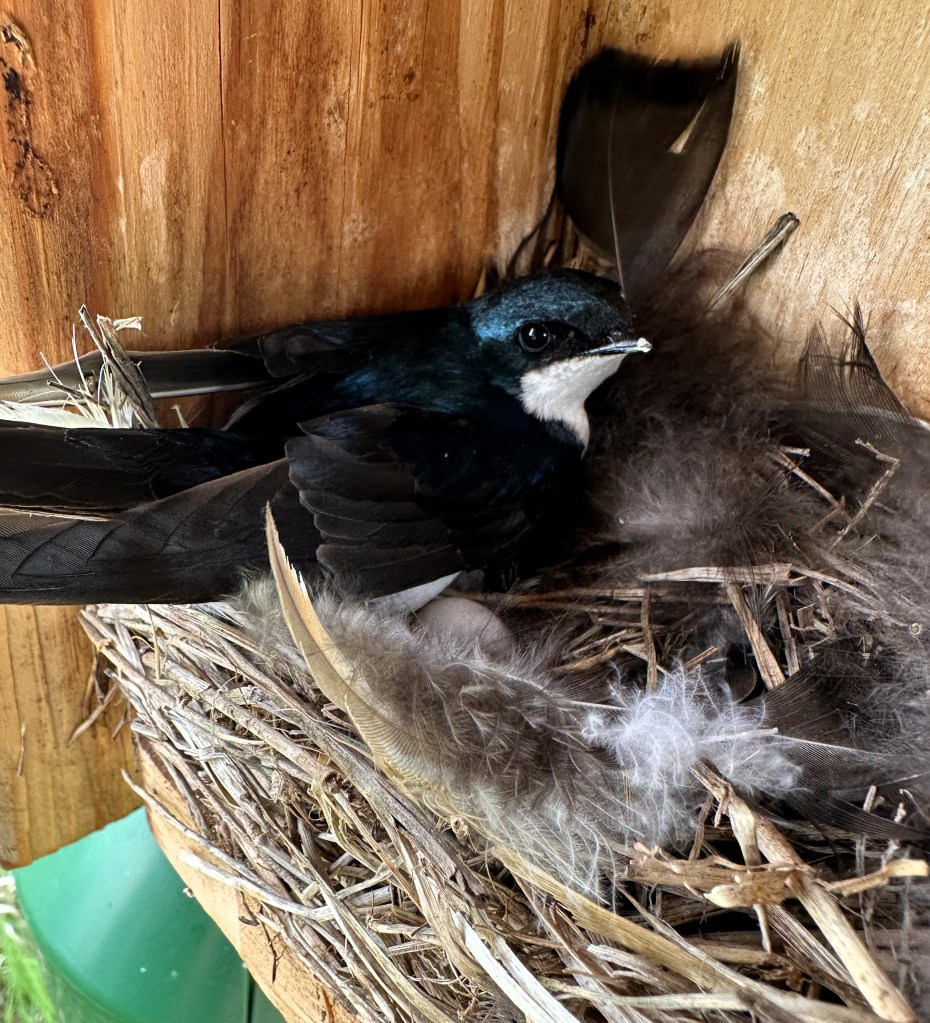
Tree swallow sitting on eggs
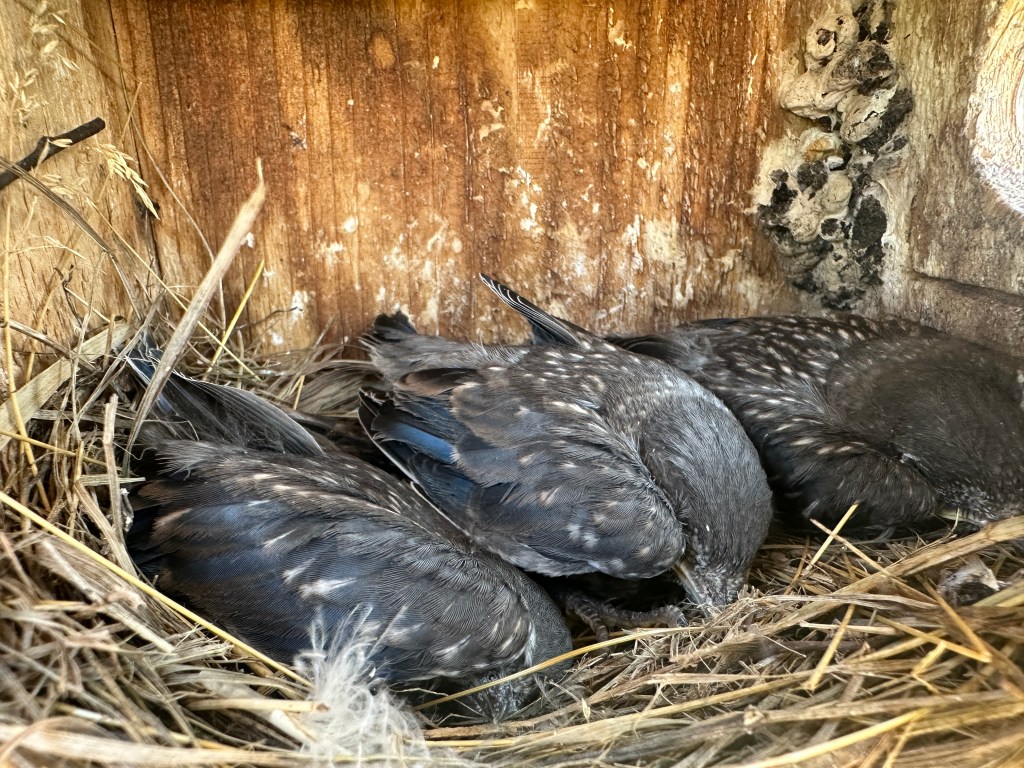
Bluebird nestlings
The brush piles are now being used by rabbits and other small mammals for shelter from hawks, owls, and coyotes. The nest boxes have hosted both bluebirds and tree swallows with several successful broods each year. Having the Bluebird trail also offers the Conservancy an opportunity for public involvement by having visitors assist in the monitoring and maintenance of the nest boxes. The data obtained can be provided to organizations such as BRAW to assist in monitoring bird populations.
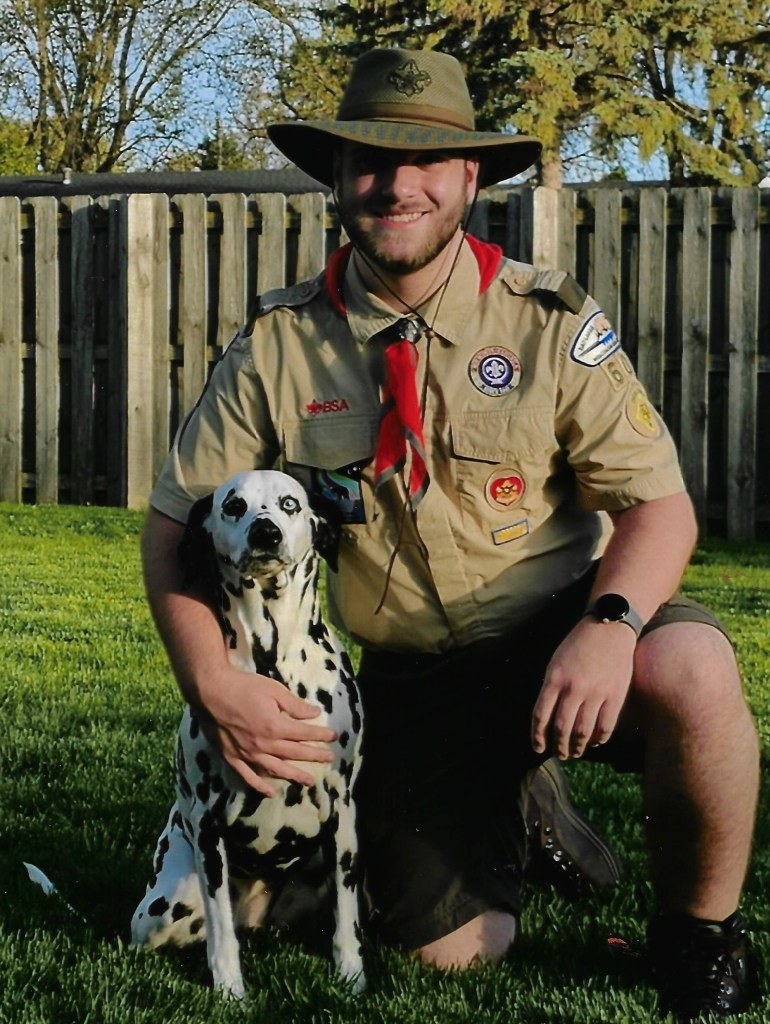
This hard work was something that we could not have done easily by ourselves and we are grateful to Keegan for his stewardship.

